Learn What Land Uses within the Green Belt May Be Reclassified as Grey Belt
In December 2024 the National Planning Policy Framework (NPPF) was revised to introduce ‘Grey Belt’ so that homes or commercial developments can potentially be built within the Green Belt in England (paragraphs 154/ 155 of the NPPF).
“For landowners, this represents a unique opportunity to explore development on land that was previously unlikely to secure planning permission,” says Tom Rankin who has more than 30 years of experience in development land.
Tom previously worked in the land acquisition teams of major housebuilders Taylor Wimpey, Barratt Homes and Balfour Beatty before founding Prime Land Consultants to buy complex and off-market sites for builders and developers in 2004.
Key ‘Grey Belt’ Criteria
In summary, to successfully argue a site is ‘Grey Belt’, a developer or landowner(s) usually needs to be able to show that the land:
- Performs poorly as Green Belt.
- Has limited environmental value.
- Has a strong housing or public benefit case.
- That the development would be sustainable.
- That there is no ‘coalescence’ or ‘joining up’ of settlements.
Prime Land Consultant’s Requirements for Grey Belt Development Sites
To approve development in the Green Belt, councils must decide whether the benefit clearly outweighs any harm.
Tom Rankin continues: “These changes to planning law represent the biggest relaxing of planning rules for decades. And, for the first time, this is an admission that brownfield land alone will not be enough to deliver the number of homes the country needs.
“As a result, councils will be required to review green belt boundaries – which were created to prevent urban sprawl – by identifying lower quality ‘grey belt’ land that can be built on.”
Sites with a high probability of qualifying as grey belt sites need to meet the Grey Belt Formula:
previous development + low environmental value + existing infrastructure
Grey Belt Land Urgently Wanted from the Midlands to Southern England
Grey belt’ land has hit the news since the new government came into power and announced the impending Planning and Infrastructure Bill.
As a specialist land agency that acquires land for its clients, Prime Land is looking for development sites of over an acre suitable for:
- Residential development.
- Care homes.
- Housing for the elderly.
- Food retail, such as supermarket sites.
Any sites of around an acre may be ideal for winning consent for new care homes.
What Land Uses Could Qualify as Grey Belt?
Grey Belt land tends to be lower-performing parts of the Green Belt that may be suitable for development. Land that qualifies as Grey Belt is typically Green Belt land that has previously been developed and (or) does not strongly contribute to key Green Belt purposes.
- Previously developed (brownfield) land.
- Makes a weak contribution to preventing urban sprawl or settlement coalescence.
- Limited importance to historic setting.
- Makes a low overall contribution to key Green Belt purposes and its development would not undermine the wider Green Belt.
- Located in a potentially sustainable location.
- Is typically lower-quality or degraded land.
In more detail, ‘Grey Belt’ is ‘Land in the Green Belt made up of previously developed land and/or any other land that does not…’ (NPPF):
- Check the unrestricted sprawl of large built-up areas.
- Prevent neighbouring towns merging into one another.
- Assist in safeguarding the countryside from encroachment.
- Preserve the setting and special character of historic towns.
Your land within the green belt may have ‘physical features’ such as trees in reasonable proximity that could enclose and contain a new development or may be an infill site enclosed by other development or a road.
What Are the Top 10 Grey Belt Sites?
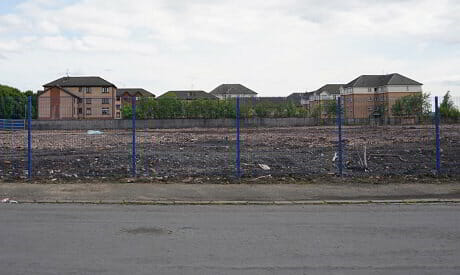
- Previously developed, redundant brownfield sites
- Former industrial sites, derelict buildings, infill plots
- Gap sites within settlements (infill between built areas)
- Land adjacent to settlements / large villages (edge-of-settlement sites)
- Long-term neglected or underused land
- Nuisance land (due to noise, odours or incompatible uses)
- Outdated light industrial buildings in poor locations
- Old farm buildings / redundant agricultural land parcels
- Land near motorway junctions / major infrastructure
- Former quarries / infilled extraction sites
“Your site can qualify as grey belt if it doesn’t undermine the purposes of the remaining Green Belt. The potential grey belt land must also pass the sustainability test. This means that the occupants of the proposed development need to be able to walk and cycle to access nearby services and public transport.
“Sites are more likely to qualify if a Council is unable to show a sufficient five-year housing land supply, which Grey Belt land could help satisfy.”
Tip: Ask Google AI / Chat GPT the question to find out if your council land supply is up to date – unsurprisingly, many Councils currently don’t have enough planned housing land!
Grey Belt Land Must Comply with The ‘Golden Rules’ (paragraph 156 of the new NPPF)
- Affordable housing should form part of the development – see below [NOTE: the Government is expecting that a higher percentage of affordable housing will be required on Grey Belt land. Unfortunately, this may impact your land value because the developer’s sales revenue will be lower. (However, the affordable housing allocation can be challenged)].
- Be sustainable – if the site is not sustainable, necessary improvements may be required to local or national infrastructure.
- The provision of new green spaces, or improvements to existing green spaces (accessible to the public), either onsite or offsite.
- The affordable housing contribution required to satisfy the Golden Rules is 15 percent above the highest existing affordable housing requirement for a development (subject to a cap of 50%).
- Higher-density housing is often encouraged in these locations, although open space must still be provided.
- Harm to the Green Belt must be clearly outweighed by benefits.
On larger sites, developers may also need to fund or build schools, GP surgeries, roads and transport upgrades, and utilities.
Examples of situations in which land may qualify as Grey Belt include:
- Councils where there is significant housing need (especially for affordable housing).
- The regeneration of derelict land.
- Sites that provide infrastructure benefits.
Ask Prime Land Consultants Whether You Have a Valuable Grey Belt Site
Tom Rankin of Prime Land concludes: “Our developer and house builder clients are very familiar with the planning process and potential issues and have extensive experience in creating productive paths through the planning system.”
If you believe that you have ‘grey belt’ land which meets the above criteria please contact Tom Rankin by email or call 07771 650506.
Sources:
- Country Land and Business Association – Grey belt overview
- Building Design CPD on grey belt identification
- GOV.UK Green Belt guidance (updated 2025)
- NHBC Grey belt definition and characteristics